
Marcus Garvey
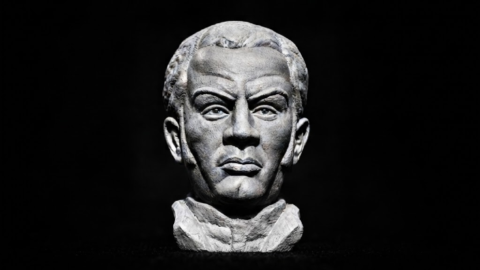
Marcus Garvey was a Jamaican-born political activist who built the largest mass movement for Black pride and self-reliance in history. His ideas directly shaped the Rastafarian movement, the Black Power movement, and even influenced later figures like Martin Luther King.
Marcus Garvey’s “Back to Africa” movement was not about abandoning the West—it was about reconnecting with ancestral roots and building a homeland where Black people could govern themselves.
He urged people to be proud of their African heritage and worked to secure land in Liberia for Black American settlers. Africa was not just a place—it was a symbol of dignity and freedom. Garvey believed that Black people would only be free when they were economically independent. That vision became his life’s mission.
Garveyism was a powerful and influential Black nationalist and Pan-African movement led by Marcus Garvey in the early 20th century. At its height in the 1920s, it attracted millions of followers worldwide, making it one of the most significant mass movements in the history of the African diaspora.
The philosophy of Garveyism is rooted in the idea of racial pride, self-reliance, and the complete redemption of Africa . It was built on several key pillars:
Race First and Black Pride: Garveyism emphasized the importance of racial solidarity, dignity, and self-love. It was one of the first movements to widely and proudly promote black physical features, history, and culture, encouraging Black people to reject assimilation into white-dominated societies . Garvey’s message was captured in his famous assertion: “I am the equal of any white man… I want you to feel the same way” .
Pan-Africanism and Nationhood: A central goal of Garveyism was the political unification and liberation of Africa. Garvey believed that people of African descent in the diaspora should look to Africa as their homeland and work towards creating a powerful, independent African nation. He famously asked, “Where is the Black man’s government? Where is his country?” and declared his intent to help make them . The ultimate goal was a “United States of Africa” .
Self-Reliance and Economic Independence: Garveyism argued that Black people could only achieve true freedom by building their own economic and political institutions. This meant supporting Black-owned businesses and creating parallel systems of commerce and trade.
The Movement in Action
Garvey organized the Universal Negro Improvement Association (UNIA) in Jamaica in 1914 and later established a powerful branch in Harlem, New York, in 1917 . Under the UNIA, Garveyism became a global grassroots movement with an active program:
The Black Star Line: This was Garvey’s most ambitious project: a shipping company established to foster trade between the Americas, the Caribbean, and Africa. It also served as a powerful symbol of Black grandeur and enterprise and was intended to facilitate the return of the diaspora to Africa .
Global Reach and Cultural Impact: The movement spread across the United States, the Caribbean, Central America, and Africa . Its official newspaper, The Negro World, was published in English, Spanish, and French and had a circulation of over 200,000, spreading Garvey’s message across four continents . The UNIA even held massive international conventions, such as the one in 1920 at Madison Square Garden, where it issued the “Declaration of Rights of the Negro Peoples of the World” .
Influence on Subsequent Movements: The ideas of Garveyism—pride in Black identity, self-determination, and anti-colonialism—were a precursor to and influenced later 20th-century movements, including the Black Power movement of the 1960s and the civil rights movement . Its influence was also felt in labor unions, political organizations, and religious institutions across the globe.