
For centuries, the Amazigh people (specifically the Sanhaja and Tuareg) and Arab groups like the Banu Hilal controlled the trans-Saharan trade routes. They transported gold, salt, ivory, and slaves across the desert to North Africa and the Middle East. West African empires like Ghana, Mali, and Songhai grew wealthy from this trade.
The Ghana Empire (c. 8th – 13th Century)
The Ghana Empire was the first great trading empire in West Africa. It rose to power by controlling the trade in gold and salt across the Sahara Desert.
Location: Parts of modern-day Mauritania, Mali, and Senegal
People: The Soninke people, who spoke a Mande language
Key Fact: Its rulers were known as the “Kings of Gold”
Why It Fell: In the 11th century, the Almoravids—a Muslim people from the western Sahara—invaded and captured the capital, Kumbi Saleh, in an effort to convert the pagan empire to Islam . Though their control lasted only about a decade, the empire never fully recovered . Drought, civil wars, and the opening of trade routes elsewhere weakened it further . In 1203, the Susu kingdom conquered most of Ghana . In 1240, Sundiata Keita, founder of the Mali Empire, captured and destroyed Kumbi Saleh, ending the Ghana Empire
The Mali Empire (c. 1235 – 1600)
After Ghana fell, the Mali Empire rose in its place. It became the second great West African empire and one of the largest empires in the world at its peak.
Location: Parts of modern-day Mali, Senegal, Gambia, Guinea, Mauritania, Burkina Faso, Niger, Nigeria, and Chad
People: The Mandinka people, who spoke a Mande language
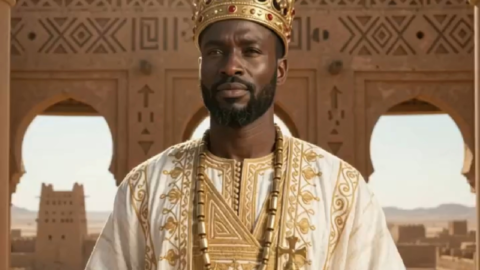
Key Fact: Its ruler, Mansa Musa, is considered one of the richest people in history
Why It Fell: After Mansa Musa’s death in 1337, the empire faced weak leadership, succession disputes, and civil wars . Vassal states like Gao (Songhai) rebelled and declared independence . In 1433-34, the Tuareg captured Timbuktu . By the late 15th century, the Songhai Empire had annexed Mali, and by 1670, the empire had reverted to individual chiefdoms
The Kingdom of Kongo (c. 1390 – 1914)
The Kingdom of Kongo was a powerful centralized state in Central Africa. It was a major source of ancestors for the Caribbean.
Location: Parts of modern-day Angola, the Democratic Republic of Congo, and the Republic of Congo
People: The Kongo (Bakongo) people, who spoke the Kikongo language
Key Fact: It was a centralized state with a king, a noble class, and a system of provincial governors
Why It Fell: In 1665, the Portuguese defeated the Kongo at the Battle of Mbwila. The kingdom fractured into civil war and was eventually absorbed into Portuguese Angola
The Songhai Empire (c. 1460 – 1591)
The Songhai Empire was the largest of West Africa’s great empires. It rose when the city of Gao broke free from Mali’s control.
Location: Parts of modern-day Mali, Niger, Nigeria, Senegal, Gambia, Mauritania, Burkina Faso, Benin, Guinea, and Guinea-Bissau
People: The Songhai people, who spoke the Songhai language
Key Fact: Under rulers like Sonni Ali and Askia Muhammad, it became a center of trade and Islamic scholarship
Why It Fell: Internal divisions, succession disputes, and weak leaders weakened the empire . A civil war in 1588 polarized Songhai society, and many in the west preferred Moroccan rule over Gao’s control . In 1590, the Moroccan sultan sent an army of 4,000 soldiers—equipped with firearms—to conquer Songhai . At the Battle of Tondibi, the Moroccan forces defeated the Songhai army . The Moroccans destroyed the Songhai Empire but could not rebuild it, leaving a power vacuum in the region