
Code Noir & The Plantation Economy in French Colonial St. Lucia
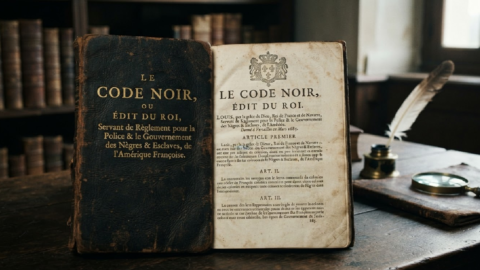
In 1685, France issued the Code Noir — the official law governing slavery in its colonies .
The Code Noir was a French adaptation of a model that had already shaped the world. But enslaved Africans adapted too—in ways that continue to shape St. Lucia today.
The Code Noir (Black Code) directly shaped St. Lucia’s society, but its application there was uniquely complicated by the island’s turbulent history of switching between French and British rule.
Here’s how it left its mark:
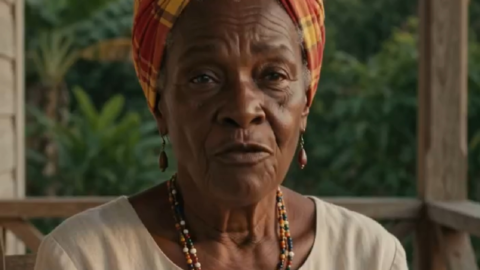
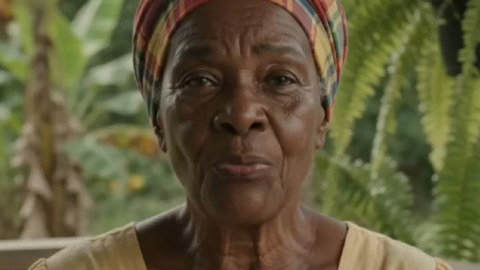
Controlling Clothing: It legally controlled how enslaved women could dress, forcing them into a simple chemise jupe outfit (white blouse, two skirts). After emancipation in 1834, women resisted by wearing elaborate, formerly forbidden dresses as a symbol of freedom .
Brutal Legal Framework: Enacted by Louis XIV in 1685 for French colonies, it defined slaves as property, mandated Catholic baptism, restricted gatherings, and legalized harsh corporal punishment .
Historical Overlap: Though a British colony from 1814 onward, France ruled St. Lucia during the Code’s active era. French legal influence persisted, notably in its civil code .
Maroon Resistance: The French-era chaos fueled resistance. Runaway slaves (Maroons) exploited the power struggles between France and Britain to escape into the mountains and form free communities .
While created for French colonies like Martinique, the Code Noir’s legacy—particularly its control over dress and the resistance it sparked—remains a key part of St. Lucia’s complex, layered history.
The society that grew under the Code Noir in St. Lucia was a rigid, race-based pyramid designed to keep control at the very top. You can see this clearly in three key areas:
A Three-Tiered Racial Pyramid:
Top – White Elite: The small planter class and colonial officials at the apex.
Middle – Free People of Color: A crucial buffer group of mixed-race (“mulattoes”) and freed Blacks, who were technically free but faced legal restrictions.
Base – Enslaved Africans: The vast majority, legally classified as “moveable property” with almost no rights.
Physical Segregation: This hierarchy was literally built into the land. Enslaved villages were positioned to be clearly visible from the master’s house (often on a hill), enforcing surveillance. They were also kept at a distance and sometimes placed in less desirable or more vulnerable locations.
A “Middle” Class Trap: The Code set limits on free people of color. For example, Article 58 demanded they “show singular respect to their former masters.” This kept them in a precarious spot—legally distinct from the enslaved, but socially barred from the white elite’s full status.