
The First Enslaved Africans
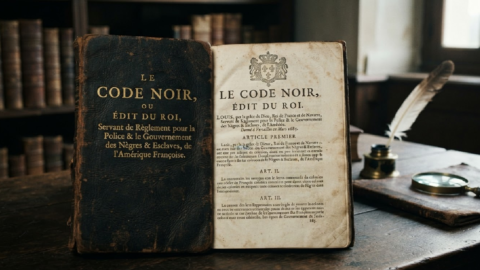
The first enslaved Africans were brought to St. Lucia in the 1650s by French colonists who came from Martinique and established settlements on the island. The French had started settling St. Lucia in 1651, and they began bringing enslaved people to work the land.
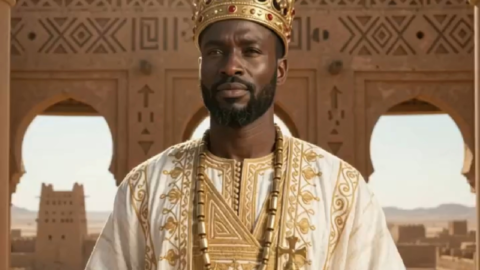
The earliest enslaved people came mainly from the Senegambia region of West Africa — the area that is now Senegal and Mali. They were primarily Wolof and Mandingo peoples. By 1663, there were 242 enslaved Africans on the island. By 1745, that number had grown to 2,573.
These ancestors of most Saint Lucians were brought to grow coffee, cocoa, and cotton at first, and later sugar. Their survival shaped the island we know today.
The earliest detailed population count for St. Lucia comes from 1730. At that time, the island was contested between France and Britain, and no single power had firm control.
The census recorded a total population of 463 people.
That number was made up of:
- 125 white Europeans—mostly French settlers
- 37 Kalinago—the Indigenous people of the island
- 175 enslaved Africans
- 126 free Black or mixed-race people
This snapshot is important. It shows that by 1730, the Kalinago—who had defended the island for generations—were already a small minority. It also shows that the enslaved African population was already larger than the European population
The Plantation Boom (1745)
Fifteen years later, the population had changed dramatically.
By 1745, St. Lucia’s total population had grown to 3,455 people.
Of that number, 2,573 were enslaved.
This was a fifteen-fold increase in the enslaved population in just fifteen years. The reason was the expansion of the plantation economy—coffee, cocoa, cotton, and later sugar. Enslaved Africans were brought in to work the land.
One detail stands out. The transatlantic slave trade database records only 183 Africans as having been directly disembarked in St. Lucia by that time. This means most of the enslaved population arrived not directly from Africa, but through intra-Caribbean trade—from established French colonies like Martinique and Guadeloupe.
The Kalinago in the Records
After 1730, the Kalinago largely disappear from St. Lucia’s population records.
This is not because they vanished entirely. It is because they avoided being counted. Many Kalinago moved to areas outside European control to escape colonial authority. When they did appear in records, they were often listed in ambiguous categories, or not listed at all.
By the early 1800s, the Kalinago on St. Lucia no longer appeared as a distinct group in the census. A small population survived, primarily in the Choiseul region on the western coast
A Growing Free Population (Late 1700s–1834)
As the plantation economy grew, so did the free population of color.
By 1772, the island’s population had reached 15,476. Of that number:
- 2,198 were white
- 13,278 were enslaved
By 1834, the year slavery was abolished in British colonies, the population had shifted again:
- 1,206 white
- 13,348 enslaved
- A growing number of free people of color
In 1833, on the eve of abolition, records show 13,000 enslaved Black people, 2,600 free Black people, and 2,300 white people on the island.
The white population had actually declined from its 1772 level, while the free Black population had grown.
What the Numbers Tell Us
The population counts tell a clear story.
In 1730, St. Lucia was still a place where Kalinago, Europeans, and Africans lived in significant numbers. By 1745, the plantation system had transformed the island. The enslaved African population had exploded. The Kalinago had been reduced to a tiny fraction.
By 1834, the island was overwhelmingly African and African-descended. The white population was a small minority. The Kalinago were barely visible in the records.
These numbers are not just statistics. They show who was brought to the island, who was forced to work, and who was pushed to the margins. They are the demographic foundation of modern St. Lucia.
St. Lucia Population Figures
The most cited figure comes from the 1730 census, which recorded 37 Kalinago on the island. At that time, the total population of St. Lucia was 463, including 175 enslaved Africans. This figure reflects a population already devastated by decades of warfare and displacement following the French settlement in 1650.
A later source notes that as early as 1639, an English landing attempt on St. Lucia failed due to Kalinago resistance, indicating a significant population at that time. A Kalinago leader named Indian Warner led 600 Caribs in 17 canoes to assist an English attack on the French settlement in St. Lucia in 1664, which suggests a substantial fighting force was still present in the mid-17th century.
The census recorded 463 total inhabitants: 125 whites, 37 Kalinago, 175 enslaved people, and the remainder (approximately 126) listed as “free Blacks or mixed-race people” . This figure is significant because it shows that by 1730, the Kalinago were already a small minority on the island they had once defended.
The 1745 figure shows a dramatic demographic shift. In just 15 years, St. Lucia’s total population grew from 463 to 3,455—a nearly 7.5-fold increase. The enslaved population alone (2,573) was almost 15 times larger than in 1730 . This growth reflects the expansion of the French plantation economy and the importation of enslaved Africans to work the land.
The 1745 figure of 2,573 enslaved people is notable because the transatlantic slave trade database records only 183 Africans disembarked in St. Lucia by that time . This discrepancy suggests that most of the enslaved population arrived through intra-Caribbean trade—brought from Martinique, Guadeloupe, or other established French colonies—rather than directly from Africa.