
What is Kélé?
Kélé was introduced to St. Lucia by enslaved Yoruba speakers . It was preserved by the Djiné people, who settled in the remote slopes of La Sorcière after Emancipation in 1838
Vodou, Kélé, and Obeah are all branches of the same tree — West African spirituality carried across the Atlantic by enslaved people
Obeah is a powerful, deeply personal memory for many who grew up in St. Lucia — and it’s a tradition with a fascinating history. It is a system of spiritual power and healing that has been part of Caribbean life for centuries, often understood as a mix of African spiritual practices and a form of resistance against colonial rule.
The Djiné Arrive
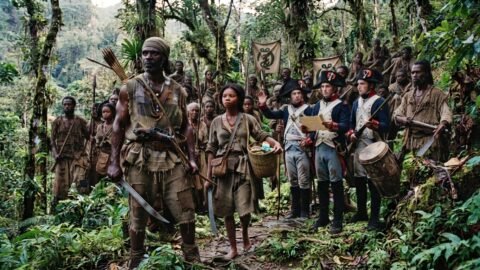
The story continues after Emancipation in 1838. A new group of Africans arrived on the island, landing in the south at Choiseul. They were called the Djiné.
They eventually moved north-east, working on plantations in areas like Grande Anse and Marquis Estate. They were the ancestors of many St. Lucians today.
Since they weren’t easily integrated into colonial society, they settled in remote areas like the slopes of La Sorcière.
A Man Named Assau
Here’s a remarkable story. A Djiné man named Assau—described as “pure, real African”—bought land on the mountain slopes after emancipation.
The place he settled is called Morne Assau on the mountain, and Fond Assau in the valley. His descendants, like Coutou and Simeon Joseph, became leaders of a sacred tradition.
The name Fond d’Or, which you’ve heard about, is now a national historic site, but the valley of Fond Assau holds a different, living history.
Kélé — The Underground Tradition
The Djiné people of Babonneau brought a powerful spiritual tradition with them called Kélé. It’s an Afro-Lucian religion that has survived for generations.
To this day, only one family in the village of Resina claims the authority to perform its rituals. Kélé involves contacting ancestors for protection, good health, and good fortune.
For much of its history, Kélé was driven underground by the colonial church, which forbade its members from participating
The Three Deities
The Kélé religion is a direct connection to West African spirituality. It’s based around three powerful deities, also known from the Yoruba and Fon traditions.
They are Eshu, the trickster and messenger; Shango, the god of thunder and lightning; and Ogun, the god of iron and war.
The rituals involve drumming, dance, feasting, and prayers to these gods for strength and protection.
The Sacred Drum
In Kélé, the drums are more than instruments—they’re sacred voices. The heart of the ceremony is the tanbou manman, or “mother drum”.
It’s joined by the tanbou ich, the “child drum.” Together, they play four specific rhythms at different moments in the ceremony.
These rhythms—adan, èrè, koudou, and kéré—accompany the dances and songs that connect the community with their ancestors,
A Legacy of Connection
The Prime Minister of St. Lucia said recently: “We are African people who have made permanent homes for ourselves on this side of the Atlantic”.
He affirmed that the “genetic Nigerian connection cannot be erased, and a shared cultural chord cannot be broken”.
From the Maroons and Djiné to the modern day, the African spirit of St. Lucia is a story of survival, strength, and cultural triumph.
The African Legacy Lives On
The survival of traditions like Kélé up to the present day is a testament to the strength of St. Lucia’s African heritage. For decades, it was practiced in secret, hidden from the colonial church.
Today, it is recognized as a vital part of the island’s cultural identity. Groups like the Folk Research Centre work to document and promote these traditions.
The story of the African people of St. Lucia isn’t just a history of the past—it’s a living, breathing part of the island’s present.