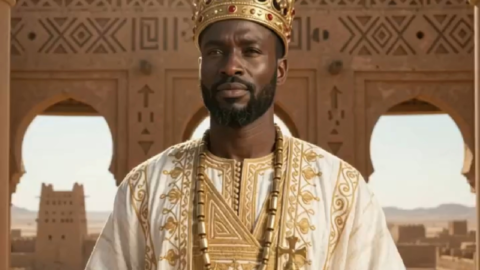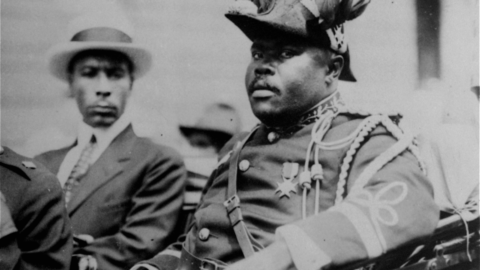

“Africa for the Africans” is a phrase that has echoed across generations. It was carried by Marcus Garvey and the Universal Negro Improvement Association in the early 20th century. It traveled through the Caribbean, the United States, and Africa. And today, it is being spoken again by a new generation of African leaders.
This video traces that thread—from Garvey’s vision of Black self-determination, through the Pan-African movements that followed, to Captain Ibrahim Traoré of Burkina Faso, who has revived the call for sovereignty, resource control, and African unity in the Sahel.
It is a story about a phrase that refused to die, and the people who kept it alive.
Ibrahim Traoré, the military leader of Burkina Faso, recently delivered a speech in the Yaadga region where he strongly urged Africans to break free from mental dependence on the West and focus on building their own nations. The core points of this speech are as follows:
Criticizing the “Stockholm Syndrome” mentality
Traoré stated that Westerners committed brutal acts such as deportation and killing of Africans over four centuries, yet many Africans now “love them more than they love themselves,” describing this as a form of “Stockholm Syndrome”—loving and protecting those who harm them. He warned that if this mindset is not changed, Africans will be “lost.”
Emphasizing economic independence and local production
He criticized the fact that everything is imported and “nothing is manufactured locally,” and called on Burkinabé people to “work toward producing what we consume”. He pointed out that Africa is rich in resources such as gold and oil but has struggled to develop, while other regions have prospered within just a few decades.
Calling for awakening consciousness and youth responsibility
Traoré emphasized that true liberation requires first “conquering freedom of thought” and abandoning a mentality of dependence. He called on the youth to use their “brains” as a weapon against imperialism, engage in innovation and entrepreneurship, and become builders of the nation rather than spectators. He also mentioned that engineering students should focus on building physical objects rather than just writing lengthy papers.
Defending national sovereignty
He described Burkina Faso as being in a “war of liberation” and an “urgent pursuit of full sovereignty,” calling on people to build a “genuinely free and independent Burkina Faso”.
Under Ibrahim Traoré, Burkina Faso has pursued an aggressive agenda of “economic sovereignty,” with the most tangible progress seen in agricultural self-sufficiency, the launch of a domestic gold refining industry, and macroeconomic stabilization. However, these achievements coexist with a deteriorating security situation making it difficult to independently verify the full picture.
🌾 Agriculture: From Deficit to Surplus
The most verifiable progress is in food production, driven by the “Agricultural Offensive” policy:
- Record Harvests: For the 2025-2026 season, cereal production reached 7.14 million tons, a year-on-year increase of 17.63%, achieving a 126.4% coverage rate of national needs—the highest level in the country’s history .
- Technological Support: Cooperation with China has been key, with hybrid rice demonstration fields yielding over 9 tons per hectare, far exceeding the local average of 2.37 tons .
Mining: Building a Domestic Refining Industry
Traoré’s government has sought to change the situation where gold is only mined but not refined domestically:
- First Refinery Opens: In September 2026, Burkina Faso’s first national gold refinery (RAFFINOR-BF) was inaugurated, costing approximately $19 million, with an initial annual refining capacity of 164 tons (planned to expand to 515 tons) .
- Policy Support: The government suspended exports from artisanal mines in 2024 and mandated that foreign mining companies transfer a 15% stake to the state .
📊 Economy: IMF Data Shows Improvement
Despite security challenges, the IMF’s assessment indicates that reforms have had positive effects:
- Growth Accelerates: Real GDP growth reached 5.3% in 2025, up from 4.8% in 2024, driven by gold prices and mining reforms .
- Deficit Narrows: The fiscal deficit was significantly reduced from 5.8% of GDP in 2024 to 1.8% in 2025, and inflation also fell to negative levels .
Under Ibrahim Traoré, Burkina Faso’s manufacturing sector has seen tangible expansion, with the government prioritizing local processing of raw materials—particularly in textiles, agro-food processing, and construction materials. According to official figures cited by AFP, the industrial sector’s contribution to GDP rose from 24% to 32.9% .
🧵 Textiles: From Raw Cotton to Finished Garments
The flagship project is the TEXFORCES-BF industrial complex, inaugurated in September 2026 in Bobo-Dioulasso. Costing roughly 17 billion FCFA (~$30 million), it processes over 12 tonnes of cotton fiber daily into fabric, uniforms, and civilian clothing. Expected annual output includes 20 million meters of fabric and 6 million uniforms . The government also opened a National Center for Artisanal Cotton Processing (CNATAC) in 2025 and is targeting a 69% increase in seed cotton production for the 2026/2027 season to feed these new factories .
Agro-Food Processing: Tomatoes and Cereals
Traoré has personally inaugurated multiple agro-industrial units. The SOBTO tomato processing plant in Bobo-Dioulasso (launched late 2024) produces tomato concentrate under the “A’diaa” brand and employs nearly 100 workers plus seasonal staff . In Dédougou, two cereal-processing units were inaugurated in May 2026: SODAF-BM (processing 12,000–15,000 tonnes of maize annually) and CABRE (processing 35,000 tonnes of cereals and 10,000 tonnes of sesame) . A second tomato plant in Tenkodogo was reportedly 70% complete as of early 2026 .
🏗️ Construction Materials: Reducing Cement Imports
The government is actively building domestic cement capacity. The West African Development Bank (BOAD) approved 10 billion FCFA for a new Afric Cements plant in Ouagadougou with a capacity of 285,000 tonnes per year . The state also established Cim-Sahel (60% state-owned) to regulate the cement market, backed by a $26 million diaspora-bond financing agreement.
Broader Industrial Push
An economic publication counted 10 industrial units personally inaugurated by Traoré since taking power, representing roughly 132 billion FCFA in announced investments across oil, textiles, tomatoes, flour, cement, detergents, beverages, cashew, and maize processing . The government has also signaled interest in arms manufacturing as part of its industrial self-sufficiency agenda .
⚠️ Caveats
These figures largely come from government announcements and state-aligned media. Independent verification of actual operating capacity, employment numbers, and competitiveness against imports (Burkina Faso still imported nearly 39,000 tonnes of clothing annually between 2019–2023) remains limited . The security crisis also constrains industrial logistics and market access.
Summary: Manufacturing progress is real but nascent—focused on import substitution (uniforms, tomato paste, cement, flour) rather than export-oriented industrialization. The textiles and agro-processing plants are the most concrete achievements, but their long-term viability depends on security, raw material supply, and whether they can actually compete with cheaper imports.