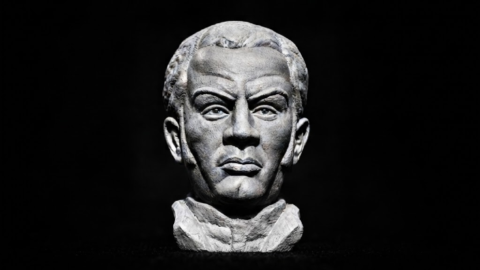

The Kalinago of St. Lucia (Hewanorra)
The Kalinago of St. Lucia successfully resisted European colonization for nearly half a century, defeating multiple English and Dutch attempts before the French finally established a lasting settlement through diplomacy rather than conquest.
The Dutch Camp (c. 1600)
- The Dutch established the first European trading outpost at what is now Vieux Fort around 1600
- They were forced to abandon it due to Kalinago opposition
The Olive Branch Disaster (1605)
- 67 English colonists landed at Vieux Fort after their ship was blown off course
- Initially received peaceably by the Kalinago, but tensions rose when Kalinago from St. Vincent arrived
- Within five weeks, only 19 survived — disease and conflict with the Kalinago claimed the rest
- The survivors escaped by bartering for a pirogue and fleeing to South America
The Wipeout of 1639-1640
- A larger English settlement of 300-400 colonists arrived around 1639
- They survived for about 18 months without interference
- The catalyst: An English captain tricked and kidnapped Caribs off Dominica, holding them as prisoners
- The Kalinago’s response: A coordinated raid from Dominica, Martinique, and St. Vincent
- The settlement was completely destroyed — the governor and most inhabitants killed, stores pillaged, dwellings burned, and colonists smoked out of their huts with red pepper
- Survivors fled to Montserrat
Why the French Succeeded (1650)
- Under De Rousselan, the French established the first lasting settlement
- The key: Rousselan took a Kalinago wife, forging a personal alliance that bought peace
- The French “purchased” the island and managed to “ward off attacks by the Kalinago”
The English Settlements (1605 & 1639)
The Kalinago forcibly removed two English attempts to colonize the island:
- The Olive Branch Colonists (1605): After an English vessel was blown off course, 67 colonists settled on the island. Within five weeks, conflict and disease reduced their numbers to just 19, forcing the survivors to flee .
- The 1639 Settlement: A larger group of about 300 to 400 English settlers (some sources say 400) managed to establish a colony. However, after roughly 18 months, a joint Kalinago raid from Dominica, Martinique, and St. Vincent wiped out the settlement, killing the governor and most inhabitants .
The Dutch Camp (c. 1600)
The Kalinago also pushed out the Dutch, who had established the first European camp at what is now Vieux Fort around 1600. They faced the same fierce opposition and were forced to abandon their trading outpost .
While the English and Dutch were driven off, the French under De Rousselan succeeded in establishing a lasting settlement in 1650 by forging a peaceful alliance (and a marriage) with the Kalinago.
Why the French Fared Better
The French colony, established in 1650 under Rousselan, survived primarily because its leader adopted a very different approach toward the Kalinagos. Rousselan took a Kalinago wife, which made him popular and respected among the indigenous population . This personal alliance bought the French precious peace and security. They also had the strategic advantage of being close to their main base in Martinique, allowing for better supply and reinforcement
The Garifuna People
The Garifuna (also called Garinagu) are a distinct Afro-Indigenous people descended from West Africans who escaped slavery and intermarried with the Kalinago and Taíno peoples on the island of St. Vincent. They are recognized as a transnational people, with UNESCO proclaiming their language, dance, and music a Masterpiece of the Oral and Intangible Heritage of Humanity.
The Garifuna are the descendants of Kalinago, Arawak speaking, and West African people who came together on St. Vincent. The African presence began as early as the 1600s, when enslaved Africans escaped from shipwrecks or from neighboring islands and found refuge among the Kalinago. Over generations, they intermarried and formed a distinct Afro-Indigenous culture, known to Europeans as the “Black Caribs” but calling themselves Garifuna . On St. Vincent, they built communities independent of the plantation system and resisted European settlement for over a century.
Their most famous leader, Joseph Chatoyer, led the Garifuna in two wars against the British, even forcing them to sign a peace treaty in 1772—the first time Britain had done so with Indigenous people in the Caribbean . But after Chatoyer was killed in 1795 and the resistance was finally crushed, the British rounded up the survivors. In April 1797, just over 2,000 Garifuna were loaded onto ships and exiled to the island of Roatán, off the coast of Honduras . From there, they spread along the Central American coast—to Honduras, Belize, Guatemala, and Nicaragua—where their descendants live today
St. Lucia’s Colonial History – A Pattern of Staying and Adapting
For most of the 18th century, St. Lucia was dominated by French settlers from Martinique, even during periods of nominal British control or neutrality. The island was described as “a society of small farms owned by settlers from Martinique and Barbados” up until the 1760s
When the British did take control (such as after the 1763 Treaty of Paris), the French planter class often stayed to protect their investments, which included land and enslaved people. The British administration usually had to accommodate them because they were the existing economic structure of the island.
The Deportation Exception (1794)
There was, however, a major exception. When the British captured St. Lucia in 1794, the political climate was extreme due to the French Revolution. The British conducted deportations of prominent French citizens who were deemed a threat. For example, Jean Baptiste Lamarque, a wealthy sugar merchant and mayor of Castries, was deported from St. Lucia in 1794 .
These deportations were political and targeted, not a blanket evacuation of every French landowner. Many French planters remained, and their discontent with British rule (especially taxes and policies) actually fueled later resistance .
The “Neutrality” Loophole
Even when treaties declared the island neutral or British, French colonists found ways to stay. After the 1723 declaration of neutrality, most French colonists who had settled continued to work their estates, and they were soon joined by more settlers from Martinique. The lack of formal British administration meant French cultural and economic dominance continued regardless of which flag flew.
The Real “Leaving” (1790s)
The period when planters actually abandoned the island in large numbers was during the chaos of the 1790s, not simply due to a British handover. The French Revolution, the abolition of slavery, and the subsequent war caused “most estates to be abandoned by 1793” . Many planters fled to Martinique or Guadeloupe during this upheaval .
The French planters were resilient and largely stayed put through the 18th-century handovers. It was the revolutionary wars and social upheaval of the 1790s—not the simple fact of a British takeover—that finally drove many of them off the land.
From the early 1600s to 1814, St. Lucia changed hands fourteen times—seven times British, seven times French. The island was never fully at peace. It was a pawn in a larger imperial game, and the Kalinago were caught in the middle.
After the 1640 raid and the French settlement of 1650, the fighting between Britain and France over St. Lucia continued for over a century. In 1722, the British tried again. A flotilla arrived under Captain Nathaniel Uring, landing at Petit Carenage. But within weeks, 1,400 French troops from Martinique forced them to withdraw. After that, Britain and France agreed to declare St. Lucia a neutral island. Both nations would remove their settlers. But while the French military withdrew, French settlers stayed. The neutrality was a fiction.
The Seven Years’ War changed everything. When it ended, the Treaty of Paris in 1763 formally assigned St. Lucia to France . Britain had captured the island during the war, but chose to return it in exchange for keeping Canada and territories east of the Mississippi. For the Kalinago, this was a dangerous moment. After 1763, British and French officials arrived in the eastern Caribbean determined to transform these islands into plantation colonies. The Kalinago refused to give up their land. They continued to assert their claims, frustrating imperial plans at every turn.
The American Revolution and the Treaty of Paris, 1783
When the American Revolution spread to the Caribbean, the Kalinago saw an opportunity. They allied with the French, who supported them in return for their assistance. Kalinago warriors helped French forces reclaim land they had lost, smuggled arms between islands, and disrupted British economic output . The Treaty of Paris in 1783 restored St. Lucia to France and returned most islands to their previous rulers. But for the Kalinago, the war changed nothing. The British, shaken by the resistance they had faced, became more determined than ever to impose control .
The French Revolution and the Second Carib War
The 1790s brought revolution to the Caribbean. On St. Vincent, the Kalinago and their allies rose up in what became known as the Second Carib War. Their leader, Joseph Chatoyer, was killed in 1795. The resistance was crushed. In April 1797, just over 2,000 Garifuna were exiled to Roatán . St. Lucia was not exempt from this wave of violence. The Kalinago’s long struggle for autonomy was coming to an end across the entire archipelago .
The Treaty of Amiens, 1802, and the Final Transfer, 1814
In 1794, British troops took possession of St. Lucia. They held it until 1802, when the Treaty of Amiens restored the island to France. But the peace lasted barely a year. In June 1803, British forces recaptured St. Lucia. The wars continued until 1814, when the Treaty of Versailles finally ceded St. Lucia to Britain for good. The fourteen swings were over. But for the Kalinago, the damage had already been done. The imperial powers had extinguished the last vestiges of Kalinago autonomy, and the plantation complex took hold of the island they had defended for centuries
Throughout this period, the Kalinago were never passive. They navigated between empires, allied with the French when it served them, and continued to resist British expansion. But each treaty signed in Europe weakened their position. By 1814, the Kalinago of St. Lucia had been dispossessed of the lands they had fought for generations to keep.